Insulation Contractor Marketing in Colorado: Get More Calls When Homeowners Need You Most
SOYRA Growth Team
October 4, 2026 • 18 min read
Here's the thing most Colorado insulation contractors miss. Your peak season is October through February. That's when homeowners feel the cold and see their heating bills spike. But most insulation companies don't start marketing until January — by then, they've missed 3 months of demand. Here's how to own the season before it starts.
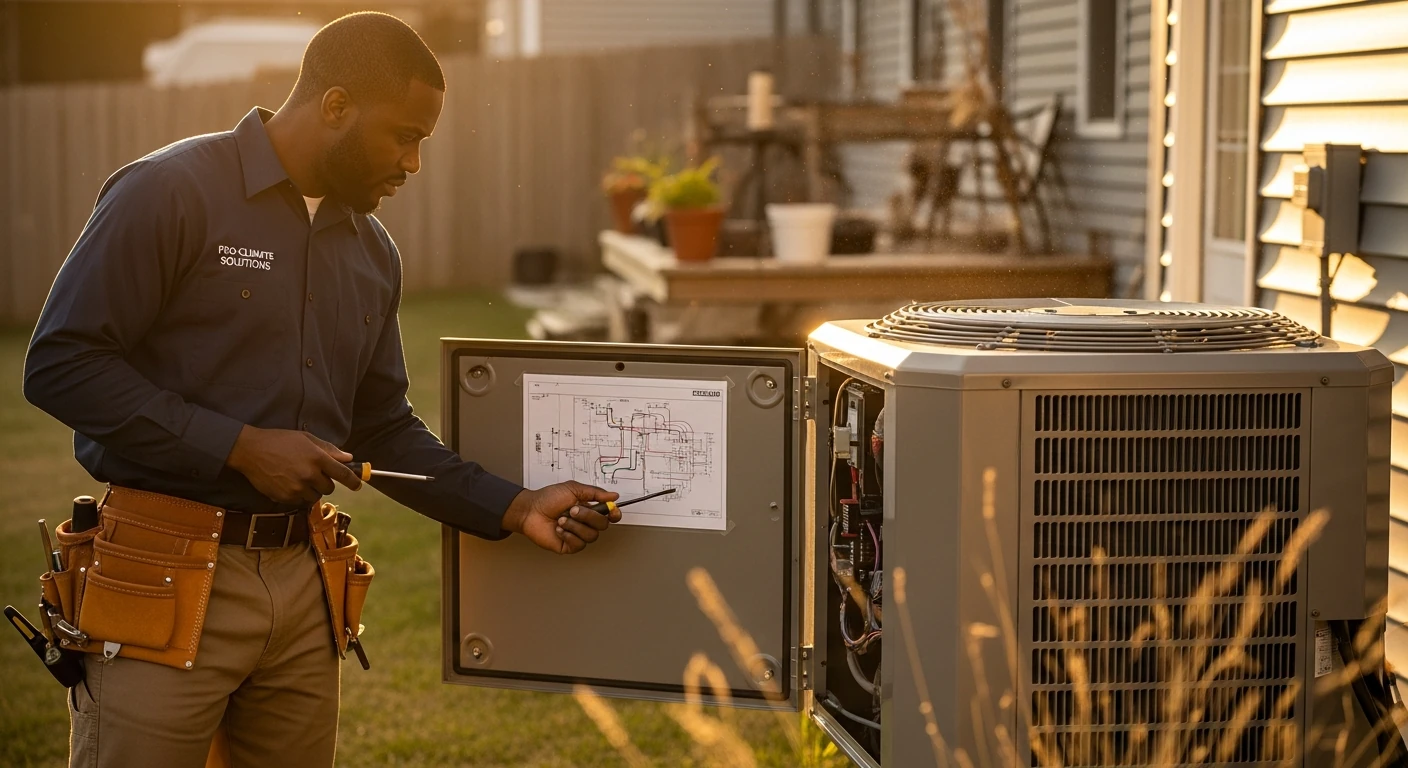
The Insulation Marketing Window That Most Colorado Contractors Miss
Let's talk about the timing mistake that costs insulation contractors a fortune. The peak insulation season in Colorado is October through February. That's 5 months. But here's what most contractors do — they start marketing in January.
By January, they've already missed October, November, and December. That's 3 months of peak demand. Homeowners who searched for insulation in October — when their heating bill first spiked — already hired someone else. The contractor who started marketing in January is competing for the late-season scraps.
Here's the math. A Denver insulation contractor who starts marketing in October fills his November-February schedule with 25-35 jobs at $2,500 average — $62,500-$87,500 in seasonal revenue. The one who starts in January gets 8-12 jobs — $20,000-$30,000. Same contractor, same market. The difference is 3 months of marketing. That's $40,000-$50,000 left on the table.
The window opens in October because that's when the first cold snap hits and homeowners turn on their furnaces for the first time. Their heating bill jumps. They search "why is my heating bill so high." The answer is insulation. The contractor who's visible in October captures that search. The one who waits until January misses it.
Real talk: if you market insulation in Colorado, October is your January. Start then. The contractors who do own the season. The ones who don't compete for leftovers.
Why Homeowners in Colorado Search for Insulation in October — Not January
Understanding when and why homeowners search for insulation is the key to marketing it right. Here's the homeowner's journey.
October: the first cold snap. Temperatures drop into the 30s. Homeowners turn on their furnaces. Some notice cold rooms — "why is my bedroom colder than the rest of the house?" Others notice their furnace running constantly. They start searching "cold room insulation," "why is my house cold," "attic insulation Denver." Search volume for insulation terms jumps 40-60% in October.
November-December: the heating bill shock. The first full heating bills arrive. A homeowner who paid $120 a month for gas in summer now pays $280. They search "how to lower heating bill," "insulation rebates Colorado," "attic insulation cost." This is the highest-intent search period — they're ready to buy. A Denver insulation contractor gets 60% of his annual leads in November and December.
January-February: the deep cold. Sub-zero temperatures. Homeowners who've been putting it off finally act because their house is genuinely uncomfortable. Pipes freeze. Rooms are unusable. They search "emergency insulation," "frozen pipe insulation," "crawl space insulation." Demand is still high but the urgency is different — it's about comfort and safety, not just bills.
The pattern is clear. Insulation demand starts in October, peaks in November-December, and stays high through February. The contractor who's visible from October captures the full 5-month window. The one who starts in January captures 2 months. That's the difference between a full schedule and a half-empty one.
The Keywords Colorado Homeowners Use When They're Ready to Buy Insulation
Here's what Colorado homeowners actually type when they're ready to hire an insulation contractor. Target these keywords and you capture ready-to-buy customers.
"Attic insulation [city]." The #1 insulation search. "Attic insulation Denver," "attic insulation Colorado Springs." These are high-intent — the homeowner knows they need attic insulation and is looking for a contractor. A Denver insulation contractor who ranks #1 for "attic insulation Denver" gets 8-12 calls a month from that one keyword.
"Insulation contractor [city]." "Insulation contractor Denver," "insulation company Colorado Springs." Broad but high-intent. The homeowner wants a professional, not a DIY solution.
"Spray foam insulation [city]." Higher-value search. Spray foam jobs run $3,000-$8,000 versus $1,500-$3,000 for fiberglass. A Colorado Springs contractor ranking for "spray foam insulation Colorado Springs" gets 4-6 high-value jobs a month.
"How to lower heating bill [city]." Top-of-funnel but high-intent. The homeowner has a problem (high bills) and is looking for solutions. A contractor who has a page answering this question — with a CTA to schedule an insulation assessment — captures these searches. A Denver contractor's "how to lower your heating bill" page produces 6-8 leads a month.
"Crawl space insulation [city]" and "basement insulation [city]." Niche but high-value. Crawl space and basement insulation jobs run $2,000-$5,000. Less competition than attic insulation. A Fort Collins contractor ranking for "crawl space insulation Fort Collins" gets 3-4 jobs a month with little competition.
Build a page for each keyword. "Attic insulation Denver." "Spray foam insulation Colorado Springs." "Crawl space insulation Fort Collins." Each page targets one keyword, answers the homeowner's questions, and has a clear CTA. A Denver insulation contractor who built 6 service pages gets 40+ organic leads a month — all free.
Local SEO for Colorado Insulation Contractors: How to Own Your City Before Winter
Local SEO for insulation comes down to three signals. Get these right and you rank in your city. Get them wrong and you don't.
Signal 1: Relevance. Does your Google Business Profile clearly say you do insulation in your city? Set your primary category to "Insulation contractor." List your city in your service area. Write a description that mentions your city and every insulation type you offer — attic, spray foam, crawl space, basement. A complete, city-specific profile ranks above a generic one. Always.
Signal 2: Distance. How close is your listed address to the searcher? Google prioritizes businesses near the searcher's location. If your address is in Denver, you rank for Denver searches. If you serve multiple cities, list them all in your service area and build service pages that mention each — this helps you rank in cities where you don't have a physical address.
Signal 3: Prominence. How established and well-reviewed is your business? The insulation contractor with 40 reviews and a 4.9 rating beats the one with 12 reviews and a 5.0 rating. Volume matters as much as score. A Denver insulation contractor who went from 15 to 48 reviews in 6 months jumped from #7 to #2 in the map pack for "insulation Denver." Calls went from 5 a month to 28.
The key for insulation: start SEO in the summer so you rank by October. SEO takes 3-6 months to produce results. If you start in October, you won't rank until February — missing most of the season. A Denver insulation contractor who started SEO in July ranked #3 for "attic insulation Denver" by October — just in time for peak season. He got 45 organic leads that winter.
Google Business Profile for Insulation Companies: What the Top-Ranked Ones Have in Common
For insulation contractors, the Google Business Profile is where the real leads are. The map pack — those three businesses at the top of Google Maps — gets 60% of all clicks for local service searches. Here's what the top-ranked insulation profiles have in common.
Complete every field. Category, service area, hours, description, services list. The top-ranked profiles are 100% complete. A profile that's 70% complete ranks below one that's 100% complete. Always. Write a 750-character description mentioning your city and every insulation type you offer.
List every insulation type as a service. Attic insulation, spray foam insulation, crawl space insulation, basement insulation, wall insulation, soundproofing insulation. When a homeowner searches "spray foam insulation Denver," your profile matches if you list spray foam as a service. A contractor who added 8 service types got 40% more profile views in 60 days.
Upload 40+ photos. Real job photos, labeled with the service and city. "Attic insulation installation, Denver, CO." "Spray foam, Colorado Springs." Google weighs photos heavily. Profiles with 40+ photos get 3x more calls than profiles with 5 photos. Include before/after photos — a poorly insulated attic versus a properly insulated one. Before/after photos convert.
Get reviews — lots of them. The map pack is largely a review contest. The insulation contractor with 40 reviews and a 4.9 rating beats the one with 12 reviews and a 5.0 rating. A Denver contractor who went from 15 to 48 reviews in 6 months jumped from #7 to #2 in the map pack. Calls went from 5 a month to 28.
Post weekly, especially in season. A finished attic insulation job, a tip about lowering heating bills, a rebate announcement. Posts signal an active business. A profile that hasn't posted in 4 months looks dead. Post more in October-February when demand is highest.
Reviews for Insulation Contractors: How to Get 30 in 90 Days
Reviews are the single biggest factor in insulation map pack ranking. They drive ranking. They drive click-through rate. They drive close rate. An insulation contractor with 40 reviews closes 35% of estimates. One with 12 reviews closes 18%. Same work, same price. The reviews do the selling.
But most insulation contractors ask for reviews the wrong way. They ask in person, at the end of the job, and hope the customer remembers. They don't. The response rate for in-person asks is about 10%.
The fix is automated text requests. The day the job finishes — the day the customer notices their house is warmer and their furnace runs less — they get a text. "Hey [name], thanks for choosing us for your attic insulation in Denver! If you're happy with the work, a quick Google review would mean a lot. It takes 30 seconds. Here's the link."
Text requests get a 25-35% response rate. So if you finish 10 jobs a month, you get 2-3 reviews a week. That's 30+ reviews in 90 days. One Denver insulation contractor went from 11 to 42 reviews in 6 months using this system. His map pack ranking went from #6 to #1.
The timing is everything. Ask the day the job finishes — when the customer is experiencing the benefit (warmer house, lower bills). Wait a week and the novelty fades and the response rate drops by half. Automate it so it always goes out on time. Mention your city in the request so customers reference the local work — "best insulation contractor in Denver" reviews are local SEO gold.
Energy Efficiency Rebates in Colorado: How to Market Them and Get More Calls
Here's a marketing advantage most insulation contractors underuse. Colorado offers energy efficiency rebates that can cover $200-$1,500 of insulation costs. Market these rebates and your call volume jumps 30-50%.
Xcel Energy rebates. Xcel Energy offers insulation rebates for Colorado customers — typically $0.50-$1.00 per square foot of attic insulation, up to $300-$500. For a typical attic, that's $200-$500 back. Market this: "Get up to $500 back on attic insulation with Xcel Energy rebates." A Denver insulation contractor who marketed Xcel rebates saw call volume jump 40% in 60 days.
Local utility rebates. Colorado Springs Utilities, Fort Collins Utilities, and other local utilities offer their own rebates. Some cover insulation, some cover air sealing, some cover whole-home energy audits. Research the rebates in every city you serve and market them. A Colorado Springs contractor who marketed CSU rebates got 35% more calls.
Federal tax credits. The federal government offers a tax credit of up to $1,200 for insulation and air sealing. Market this: "Get up to $1,200 back on insulation with federal tax credits." This makes premium insulation affordable for homeowners who were on the fence. A Denver contractor who added federal tax credit messaging to his site and ads saw his close rate jump from 25% to 38%.
Bundle the rebates in your marketing. "Get up to $1,500 back on attic insulation with Xcel rebates + federal tax credits." This messaging lowers the customer's perceived cost and increases urgency. A homeowner who was considering a $2,500 attic insulation job now sees it as a $1,000 job after rebates. That's the difference between "let me think about it" and "let's book it."
The key: handle the rebate paperwork for the customer. Most homeowners won't deal with rebate forms. If you say "we handle all the rebate paperwork for you," you remove the friction and close more jobs. A Denver insulation contractor who started handling rebate paperwork saw his close rate jump 20% — customers loved not having to deal with it.
The Follow-Up System That Books Insulation Jobs From Estimates That Go Cold
Here's a number that should keep you up at night. The average Colorado insulation contractor closes 20-25% of estimates. The ones using automated follow-up close 40-50%. Same estimates, same prices. The difference is follow-up.
The problem is most insulation contractors give one estimate and wait. The customer says "let me think about it" or "I need to talk to my spouse" or "let me check on the rebates." The contractor says "sure" and never follows up. The customer hires whoever called back. You lost a $2,500 job because you didn't send a text.
The fix is automated follow-up. Here's the sequence that works. After every estimate, the customer gets a text in 30 seconds: "Thanks for having us out! Here's your estimate: [amount] for [insulation type]. With rebates, your net cost is [lower amount]. Any questions? Reply here or call [number]." Day 2: "Just following up — did you have any questions about the estimate or the rebates?" Day 5: "Last note — winter's coming and we have an opening next week. Let me know if you want to get this done before it gets colder."
This 3-touch sequence runs automatically on every estimate. The result? Close rates jump from 22% to 42%. Same estimates, same prices. Just consistent, automated follow-up that never forgets.
One Denver insulation contractor added this system and went from closing 24% of estimates to 44%. On 30 estimates a month, that's 6 extra jobs. At $2,500 average, that's $15,000 in recovered revenue a month. From a system that costs under $200 a month. That's the power of follow-up — it recovers jobs you already earned but were losing to competitors who called back. Bottom line: insulation is a seasonal goldmine for contractors who market it right. Start in October, not January. Target the keywords homeowners actually search. Own your Google Business Profile. Collect reviews. Market energy rebates. And automate follow-up so no estimate goes cold. Do that and you'll own the season before your competitors even start.
Want to Own Insulation Season in Colorado?
We build the seasonal marketing system, the rebate messaging, the review automation, and the follow-up that fills Colorado insulation contractors' schedules from October through February. Stop missing 3 months of peak demand.
Frequently Asked Questions
How do insulation contractors get more leads in Colorado?
Insulation contractors in Colorado get more leads by marketing from October through February when homeowners search for insulation, optimizing their Google Business Profile for city-specific searches, building service pages like "attic insulation Denver," collecting 30+ reviews with automated text requests, and marketing energy efficiency rebates. Because most insulation companies don't market until January, contractors who start in October own the season.
What's the best time of year to market insulation services in Colorado?
The best time to market insulation in Colorado is October through February. Homeowners start searching for insulation when temperatures drop and heating bills rise. Most insulation contractors don't market until January, so contractors who start in October capture 3 months of leads competitors miss. October marketing fills the November-February schedule when demand peaks.
How much should an insulation contractor spend on marketing?
Most successful Colorado insulation contractors spend 6-9% of gross revenue on marketing. A $500,000 company budgets $30,000-$45,000 a year, split between Google Local Services Ads, local SEO, a converting website, and automation tools. Because insulation is seasonal, front-load budget into October-February when demand and ROI are highest.
Is Google Ads worth it for insulation companies?
Yes, Google Local Services Ads are worth it for insulation companies. Insulation leads cost $25-$50 each in Colorado, and at a 25-35% close rate that's $71-$200 per booked job. On a $2,500 attic insulation job, that's 3-8% of revenue. LSAs are exclusive, show above the map pack, and produce leads the day you turn them on — perfect for capturing seasonal demand.
How do energy efficiency rebates help insulation marketing in Colorado?
Colorado offers energy efficiency rebates through Xcel Energy and local utilities that can cover $200-$1,500 of insulation costs. Marketing these rebates — "Get up to $1,000 back on attic insulation" — increases call volume 30-50% because it lowers the customer's net cost. Contractors who market rebates close more jobs at higher margins because the rebate makes premium insulation affordable.